Justice 101: Prison Gerrymandering
Thursday, April 23, 2026
5:30 - 7:30pm EST
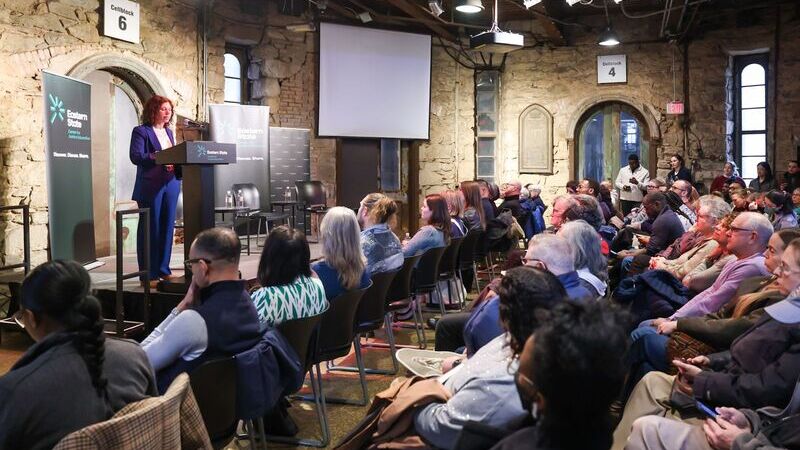
Join us for a conversation on prison gerrymandering, a practice that distorts our democratic process and dilutes the political power of communities across the nation. In this discussion, we'll examine how the current method of counting incarcerated people for representational purposes, often in rural, non-resident districts, allows for the manipulation of political power.
We'll be joined by: Rory Kramer, Ph.D. (Associate Professor of Sociology, Villanova University), Carol Kuniholm, Ph.D. (Co-Founder and Chair, Fair Districts PA), Andrew McGinley, J.D. (Vice President of External Affairs, Committee of Seventy), and Brianna Remster, Ph.D. (Associate Professor of Sociology and Criminology, Villanova University). Together, we will explore the history and mechanics of prison gerrymandering, highlighting how it essentially exports the population, and thus the political influence, of urban and largely minority communities to boost the political power of the primarily white, rural areas where prisons are located. Moderated by Kerry Sautner, Ed.D. (President and CEO, Eastern State), this conversation will feature leading voices in electoral justice and carceral reform. Together, they will unpack the true state of representative democracy when a population's physical location misrepresents the people.
Session is for learners of all ages, recommended middle school and above.

About the Panelists:

Rory Kramer, Ph.D.
Associate Professor of Sociology, Villanova University
I am an Associate Professor of Sociology at Villanova University. Welcome to my infrequently updated page, though links to my research are regularly updated.
Our book was just published! Check out our page here: Princeton University Press and consider buying it from bookshop.org as well to support local businesses.
My research focuses on the physical and social boundaries between races in the United State. Currently, I’ve focused on how criminal justice engagement affects racial justice. One primary topic of study is on the impact of incarceration on redistricting and political representation, including a co-authored piece that helped convince Pennsylvania to return incarcerated individuals to their home communities in its data for state level redistricting. I also study the role of violence in contemporary policing and the lingering effects of that violence on people and communities. Other research on spatial inequality analyzes the role of roads and other physical barriers in shaping and reifying racial residential segregation in Philadelphia. Other research studies the experience of crossing a social boundary, primarily via elite education, either in high school or college, and multiracial identity and racial fluidity.
And when I’m not doing all of that, I’m tasting the foods of Philadelphia, watching my teams (Boston for pro sports, Georgetown for college basketball and Barcelona for football. Hoya Saxa! Visca Barça!), and trying to get into shape through road biking.
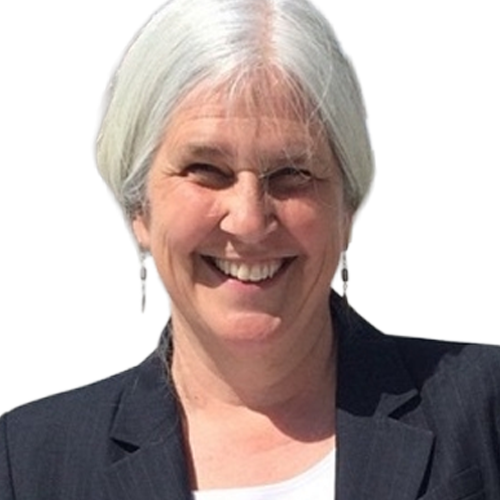
Carol Kuniholm, Ph.D.
Co-founder and Chair, Fair Districts PA
Carol Kuniholm is co-founder and chair of Fair Districts PA, a non-partisan, all-volunteer coalition working on redistricting reform in Pennsylvania. She came to this work through years spent on the board of the League of Women Voters of Pennsylvania. Since the start of the coalition in January, 2016 she has presented information on gerrymandering to audiences across the state and on local and national radio and TV. She received a PhD in American literature from the University of Pennsylvania, taught literature and writing at the college level and served for over a decade as Director of Ministry to Youth and their Families at the Church of the Good Samaritan in Paoli.
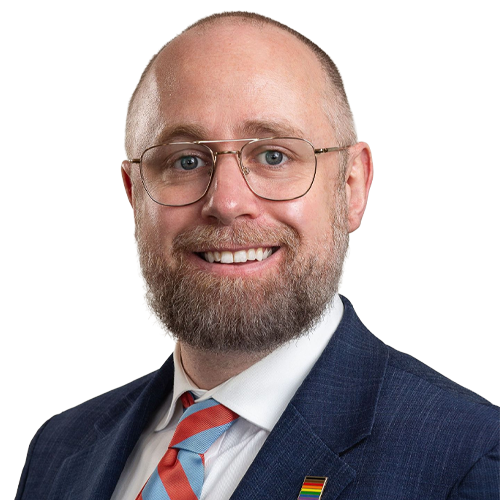
Andrew McGinley
Vice President of External Affairs, Committee of Seventy
Andrew McGinley serves as Committee of Seventy’s Vice President of External Affairs. In this role, he is responsible for leading and coordinating Seventy’s external engagement efforts, with a focus on developing policy positions and advocacy strategies for voting rights, election integrity, and good government reforms in Philadelphia and across Pennsylvania.
Andrew most recently served as the Director of Law and Policy for the Philadelphia Bar Association. Prior to joining the Philadelphia Bar Association, Andrew was the General Counsel to the Pennsylvania House Appropriations and Government Oversight Committees, where he served as the lead negotiator for the House Democrats during the 2021-2022 legislative redistricting process. Prior to working for the state legislature, Andrew was Executive Director of the Office of the Vice President for Research at Temple University. He has also served in other roles in government and public institutions.
Andrew is a two time Temple University alumnus, having earned his Juris Doctor in 2012 and a Bachelor of Arts in Strategic and Organizational Communications in 2008.
Outside of work, Andrew is passionate about making sports more inclusive and serves as the Vice President of the Philadelphia Gryphons Rugby Club.
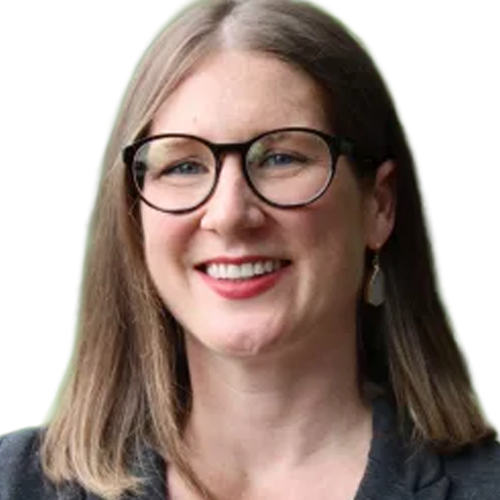
Brianna Remster, Ph.D.
Associate Professor of Sociology and Criminology, Villanova University
Brianna Remster is an Associate Professor in the Department of Sociology and Criminology at Villanova University. She earned her PhD in Sociology from Pennsylvania State University.
Her research focuses on formal social control and social inequality, examining how contact with the criminal punishment system creates and reproduces social inequalities for individuals, families, and communities. She studies how varying levels of system contact—such as police stops, arrests, or periods of incarceration—shape the transition to adulthood and influence broader involvement in social institutions. Additional areas of interest include the effects of incarceration on romantic relationships, homelessness, the nature of homelessness, and the distribution of political power en masse.
A related line of her scholarship investigates social inequalities in experiences with policing and the systemic consequences of contemporary police practices. In this work, she documents racial, ethnic, gender, and age disparities in the risk of experiencing police violence during routine low-level stops. Other research highlights the varied and far-reaching harms caused by frequent police stops and the utility of popular police reforms given those harms.
More recently, her research estimating the racially unequal consequences of prison gerrymandering for whole communities was cited as a rationale for Pennsylvania’s decision to become the 12th state to end prison gerrymandering. These findings have been featured by numerous media outlets, including The Washington Post, Time, and NBC. This past fall, she and her co-author, Rory Kramer, launched a nationwide investigation into the impact of prison gerrymandering on new state legislative maps based on the 2020 census. Their findings and data files will be released initially as a series of policy reports hosted by the Redistricting Data Hub. Stay tuned!
We strive to make the penitentiary and our site, programs, and exhibits accessible to all visitors. Click here to learn more about accessibility and accommodations at ESPHS.